
Generative AI
We design and implement GenAI solutions that streamline processes, organize company knowledge, and enhance digital products with intelligent features.





Intelligent solutions that work for your business
Generative AI delivers the greatest value when it solves a specific business problem – reducing manual workload, improving access to company knowledge, enhancing customer service, or increasing the value of digital products.
We help companies identify the right Generative AI use cases, design tailored AI solutions, and guide them through the entire AI implementation process. We do not start with technology alone. We start with your business goals, user needs, and the broader organizational context to ensure that AI creates measurable value.
Strategy before technology
We begin by identifying the areas where AI can deliver the greatest business impact.
User experience matters
We design AI-powered solutions that are not only intelligent, but also practical, intuitive, and easy to use.
From concept to implementation
We help companies move from workshops and prototypes to fully implemented Generative AI solutions that work in real business environments and can continue to evolve alongside the organization.

What can your product gain from Generative AI?
A product that understands the user
By integrating language models, your digital product gains the ability to understand intent, context, and natural language. Users can interact with the application as if they were speaking to a human – and it responds accurately and appropriately.
Personalization at scale
AI makes it possible to dynamically adapt content, recommendations, and the interface to the individual needs of each user. Instead of one scenario for everyone, your product delivers a tailored experience, which directly translates into higher engagement and retention.
Automation of complex tasks
Generative AI takes over tasks that previously required human effort – including report generation, data analysis, content classification, and query handling. Your team can focus on strategic decisions, while AI handles repetitive processes.
Competitive advantage here and now
Companies that integrate AI into their products are setting new market standards. This is not a matter of the future – it is a matter of whether your product will lead the way or fall behind the competition.
Shorter time from idea to value
AI does not only support end users. It also accelerates internal processes – from content prototyping and UX testing to code generation. As a result, the product development cycle becomes shorter and more iterative.

Where does GenAI integration deliver the greatest impact?

SaaS products and B2B platforms

Mobile and consumer applications

Internal process automation

ML models for business
mobitouch delivers on time and is proactive, creative, and critical thinking.

They are reliable, communicative, and capable of delivering functional products within agreed timelines. If your project requires a practical, no-nonsense approach and close collaboration with a technical team, mobitouch is a solid choice.

Implementing AI step by step
Our approach to the project
We work in short, iterative cycles – each one ends with a working increment that can be tested and evaluated. This allows us to validate assumptions quickly, respond to feedback, and reduce risk throughout the process.
AI projects come with their own specific challenges – outcomes are not always deterministic, and quality depends heavily on the data. That is why our process places strong emphasis on evaluation and measurability at every stage.
We work transparently: demos every 1–2 weeks, shared backlog grooming, and open access to model quality metrics.
Check out the projects we've kicked off
SmartChef is a revolutionary application that brings together the worlds of cooking and creativity, using artificial intelligence to generate culinary recipes. The SmartChef AI app is an indispensable kitchen companion for both experienced and novice chefs looking for new cooking ideas.

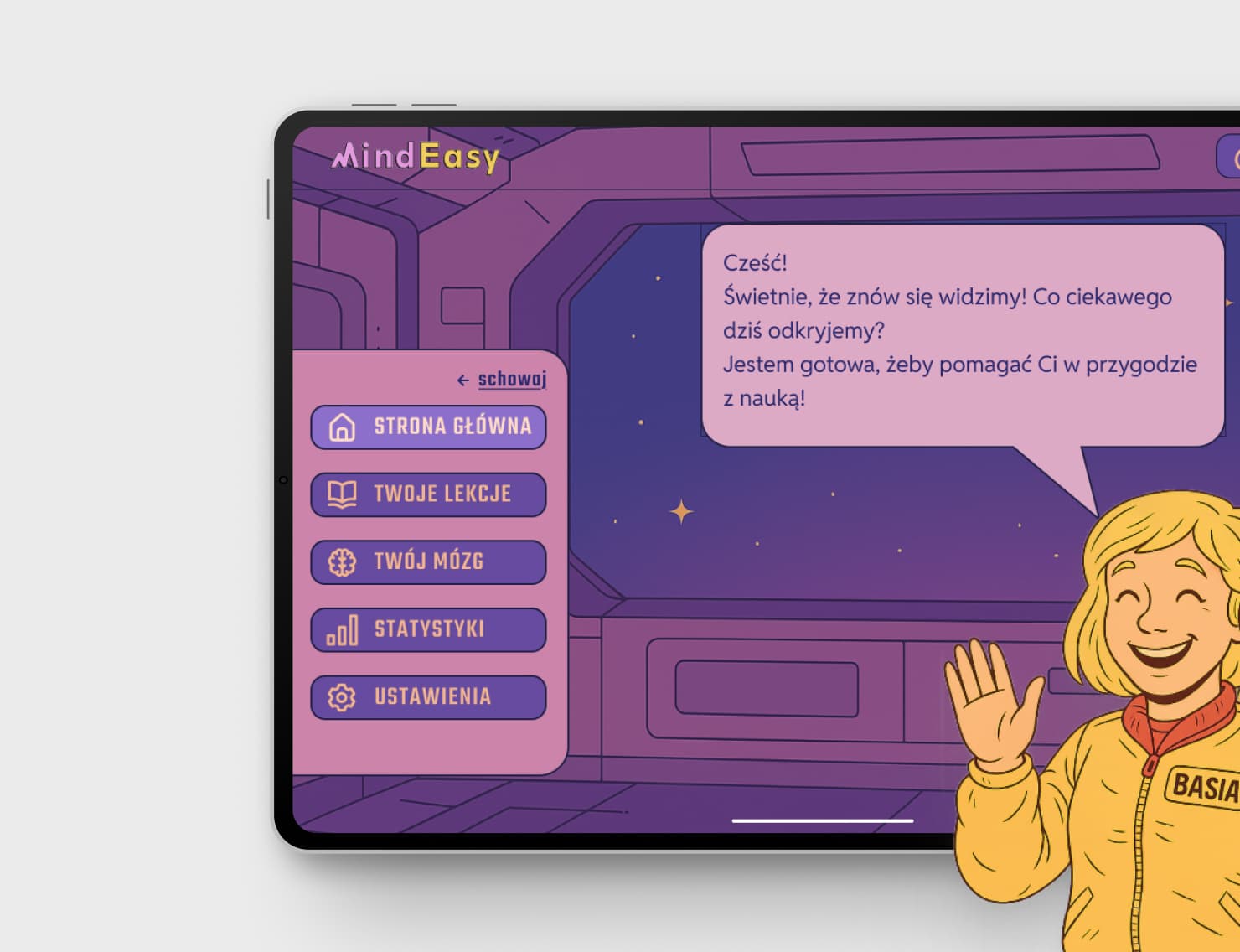
MindEasy is a neurotechnology startup developing solutions that connect brain activity with computers through brain-computer interface (BCI) technology. Its mission is to support users in both educational and therapeutic settings. The company works with universities, cultural institutions, and medical facilities to test its technologies in practical, real-world environments. MindEasy’s products can respond to what is happening in the user’s brain, using EEG signals and artificial intelligence to adapt content in real time.
We believe that good design and development are the ones that work best on all devices and every resolution.

Project Start Workshops

Digital Product Design

Mobile App Development

Web App Development

MVP Development

Find the answers
Generative AI creates content such as answers, summaries, drafts and descriptions based on your data and instructions. It delivers the most value when it solves a specific problem: reducing manual work, improving access to company knowledge, supporting customer service or adding intelligent features to your product.
The quickest wins are usually assistants that answer questions from company documents, automatic summaries and reports, content generation and intelligent search. We help you choose the use case where AI brings measurable value, not just a nice demo.
We choose the model for the task, cost and data requirements, including models from leading providers and open-source models. Where possible, we design the integration so the model can be replaced without rebuilding the whole solution.
We ground answers in your own sources (RAG), limit the scope of responses with guardrails and test the solution on prepared sets of real cases. For sensitive tasks, uncertain results go to a person for review.
We start by reviewing your processes, data and goals to find where AI makes sense. Then we build a proof of concept on real data, so you can assess the quality of the results before investing in a full implementation.