
AI Solutions

We build AI systems that actually work in production – from intelligent assistants that answer using your data, to autonomous workflows that handle multi-step business processes with minimal manual effort.





Intelligent solutions that work for your business
AI is not just a technology – it is a way to improve key business processes, from customer service and data analysis to task automation.
Our approach combines business strategy with technological expertise. We start by understanding your company’s goals, then select the right technologies and build solutions that can be easily integrated with your existing systems. This allows our clients to gain not only modern tools, but also a real competitive advantage.
We implement advanced solutions such as:
- Integrations with various AI models – generating and processing content tailored to your business
- Intelligent Knowledge Bases – chatbots powered by internal documents and materials
- AI chatbots and assistants – available 24/7 across your communication channels
- Machine learning with ML.NET – predictive models that analyze data and recommend decisions

Why Implement Artificial Intelligence?


AI Services

RAG-powered knowledge systems

Agentic AI workflows

AI-enhanced product features

ML models for business
They are reliable, communicative, and capable of delivering functional products within agreed timelines. If your project requires a practical, no-nonsense approach and close collaboration with a technical team, mobitouch is a solid choice.

mobitouch delivers on time and is proactive, creative, and critical thinking.

Implementing AI step by step
Our approach to the project
When creating AI solutions, we are guided by agile management.
We work according to Scrum standards, which lets you verify the quality of the AI on real examples early, instead of waiting for the final result.
What does this mean for you?
Sprint
The project development process is divided into sprints. These are typically one or two-week work periods, each with a specific goal. This allows you to continuously track results and easily modify the direction of the solution.

Backlog Planning
We determine the scope of the sprint and create a plan for its implementation, including data preparation, model selection and integrations. This ensures that the work is well-organized and the goals are clearly defined.

Daily Standup
These are short, daily team meetings where progress is discussed, and tasks for the next day are planned.

Sprint Review (Demo Meeting)
At the end of each sprint, we meet to show you the results achieved so far, ideally on examples from your own data. You can assess the quality of the answers and share your feedback or suggest changes.

Sprint Retrospective
This is a team meeting where the sprint is analyzed, and potential improvements are discussed, including how to raise the quality of the AI’s results.

Check out the projects we've kicked off
Voicy
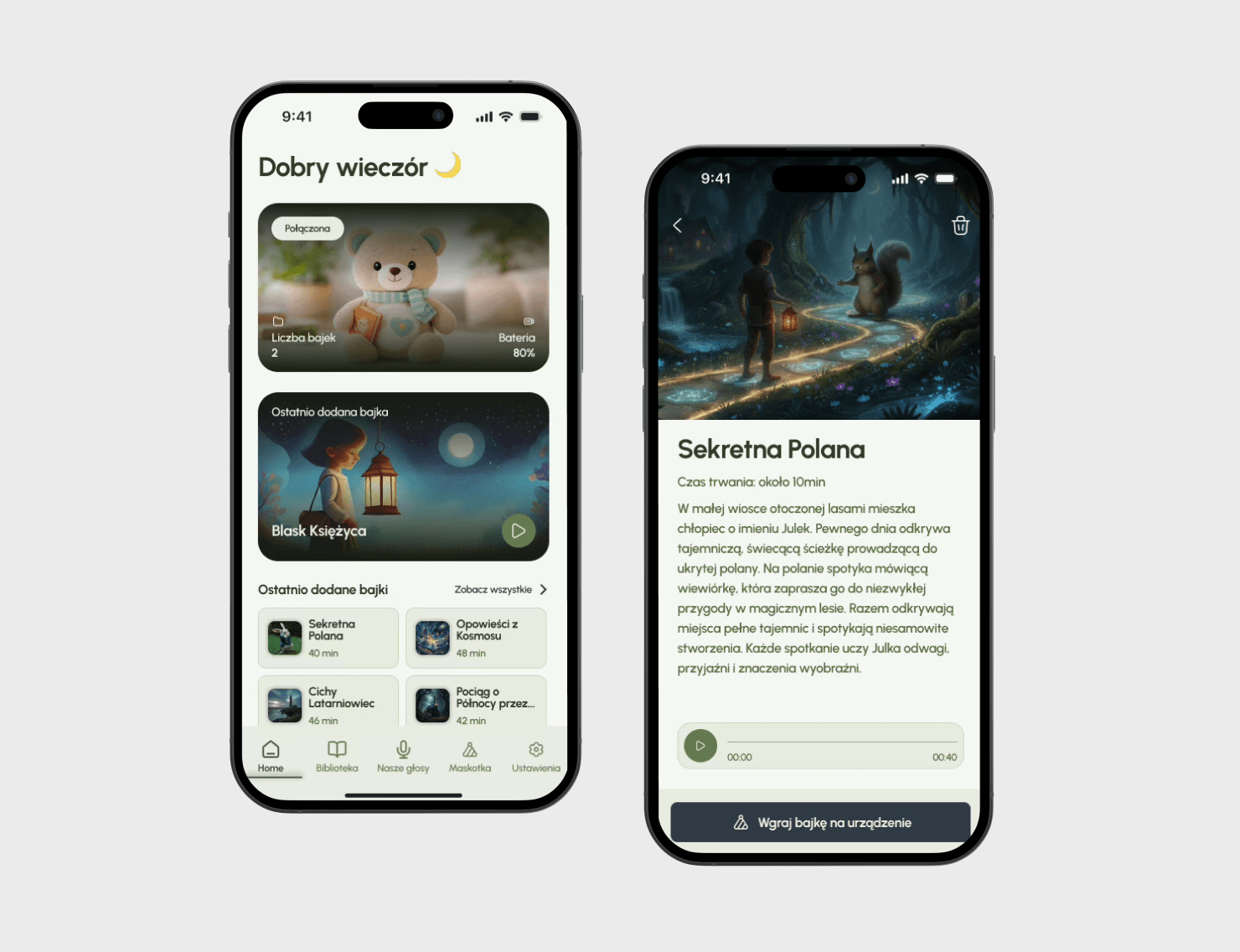
Voicy is a mobile app that lets children listen to stories narrated in their parents’ voices, even when they’re not around.
Powered by AI, it uses a short voice sample to create personalized audiobooks that children can enjoy in the app or through an interactive plush toy. It’s a unique way to maintain a sense of closeness and help children feel safe and connected throughout the day.
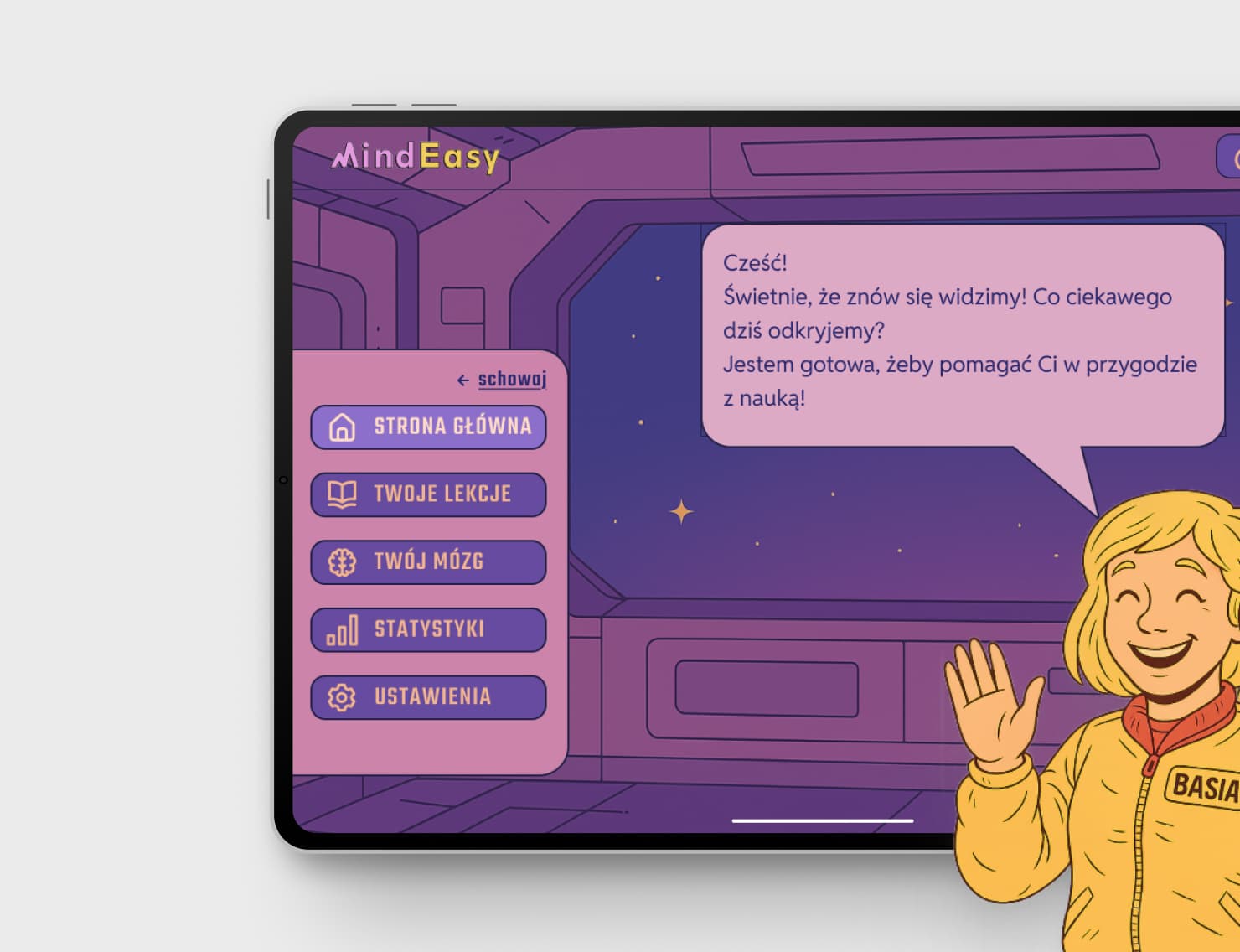
MindEasy is a neurotechnology startup developing solutions that connect brain activity with computers through brain-computer interface (BCI) technology. Its mission is to support users in both educational and therapeutic settings. The company works with universities, cultural institutions, and medical facilities to test its technologies in practical, real-world environments. MindEasy’s products can respond to what is happening in the user’s brain, using EEG signals and artificial intelligence to adapt content in real time.
We believe that good design and development are the ones that work best on all devices and every resolution.

Project Start Workshops

Digital Product Design

Web App Development

MVP Development

Find the answers
A standard chatbot answers from the general knowledge of the model, so it can make things up. A RAG chatbot first searches your documents and builds its answer from the fragments it finds. This lets it cite its sources and decline to answer when your materials don’t confirm the information.
Agentic AI completes a task from start to finish instead of only answering questions. Typical examples are document processing, data extraction, report generation and approval chains. They work best for repeatable, multi-step processes with clear rules, where a person only needs to review the doubtful cases.
We follow the data minimisation principle: the model receives only what it needs to complete the task. Where required, data is anonymised or pseudonymised before it leaves your infrastructure. We also apply access control, short retention periods for intermediate data, and confidentiality and data processing agreements.
It should not be. We choose providers and configurations so that client data is not used to train public models. We go through the terms of the specific provider with you before work begins, because they determine what data can be safely shared.
In many cases, yes: in your cloud environment, on local servers, and for smaller tasks even directly on the user’s device. The trade-off is quality and speed, since smaller local models are weaker than the largest cloud models. We choose the option based on your security requirements and the nature of the task.
We use several layers of protection: answers grounded in cited sources (RAG), guardrails that limit the scope of responses, confidence thresholds, and testing on prepared sets of cases. For sensitive processes we design human involvement: confident results pass automatically, uncertain ones go to review, and risky ones are blocked. Logs make it possible to trace what the system did and on what basis.
It depends on the scope of features, the number of integrations, the quality and availability of data, and the required level of security. Running costs matter too, such as model usage fees and infrastructure. We prepare a preliminary estimate after a workshop or consultation.