DeepCerta
Frontend Development, Backend Development

An examination platform where radiology students work with real medical scans
DeepCerta is an examination platform for medical universities. It was created by practicing radiologists with academic experience. The idea for the platform emerged in response to needs expressed by universities.
Until now, radiology exams have often taken the form of multiple-choice tests: four possible answers, sometimes accompanied by an image. A student could select a letter and pass without independently identifying a single pathological abnormality in an image. Such a test therefore failed to measure one of the most important skills in radiology: the ability to independently locate and recognize pathological findings.
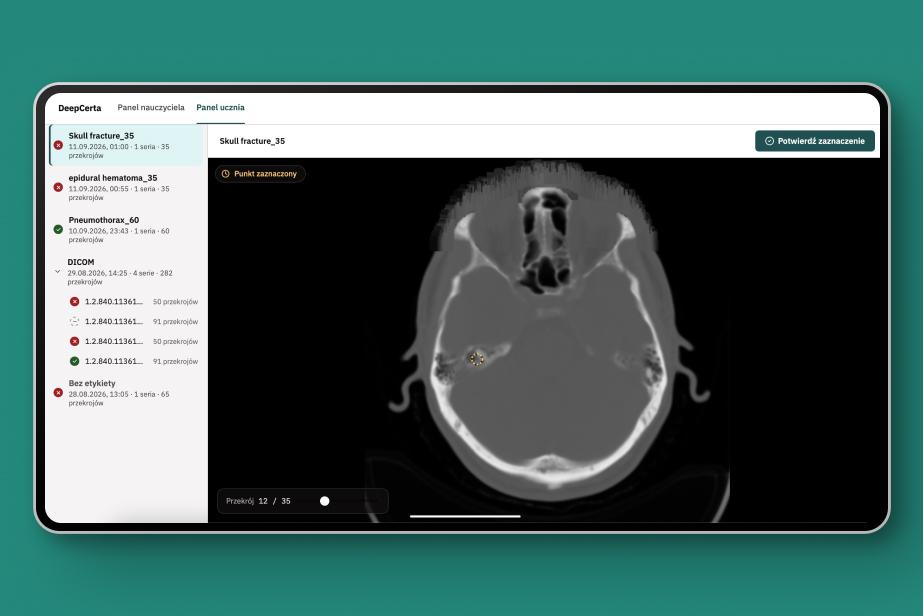
DeepCerta tests this specific skill. Students receive a complete medical scan in their browser, navigate through successive slices, and click where they see an abnormality, without a list of answers to choose from.
- Cornerstone3D
- DICOM
- Object Storage
The first and most important challenge was the process of preparing exam questions, and more specifically, the radiologist’s time. The radiologist had to prepare the material students would work with, so every additional step mattered.
A CT scan, which forms the basis of the exam, is not a single image but a series of anywhere from over a hundred to as many as three hundred slices. An abnormality may be visible on a dozen or more of them, and each of those slices has to be annotated separately. Preparing a single question therefore requires more than a dozen manual annotations.
One potential solution was to import existing contours from tools radiologists use in their daily work, but that would have meant switching between programs and adding extra steps to the process.
The idea behind the DeepCerta application was to make it possible to prepare an entire question in one place, without wasting time transferring data.
The second challenge was the exam itself. Students needed to navigate through successive slices in much the same way a radiologist would, so we needed a medical image viewer tailored to the examination process. Not a complete diagnostic workstation with hundreds of functions, but a tool focused on what students actually need to demonstrate their knowledge. The viewer had to work together with the examination application, and the entire experience had to feel like one cohesive tool.
The third challenge was automatic answer grading. The radiologist outlines the area containing an abnormality (the correct answer), while the student points to the location where they see it in the image. The system therefore has to compare the point selected by the student with the area marked by the radiologist and determine whether the answer is correct.
For DeepCerta, we developed a web application that significantly streamlines the process of preparing exams for future radiologists.
Examiners use the application to prepare questions based on their own medical scans, while students take the exam on a computer. Everything happens within a single browser window.
Before the solution took its final shape, several decisions had to be made.
A custom application with a built-in medical image viewer.
Ready-made medical image viewers already exist. We could therefore have built the platform as an extension of one of them. However, these viewers are primarily designed as diagnostic tools, with functions radiologists need when working with medical scans. The DeepCerta team needed something different: an application that would allow examiners to prepare questions, assemble them into exams, and automatically grade answers. Adapting an existing tool to these needs would have required considerable work, and the result would not have offered all the benefits of a custom application.
That is why we built the application from scratch, with the medical image viewer as one of its components. We based it on Cornerstone3D, an open-source library for displaying medical scans in a browser and handling DICOM files, the standard format for CT and MRI scans.
Students have access only to the functions they need during an exam: scrolling through slices and marking an abnormality. This allows them to focus on the scan and the task itself rather than navigating a complex tool.
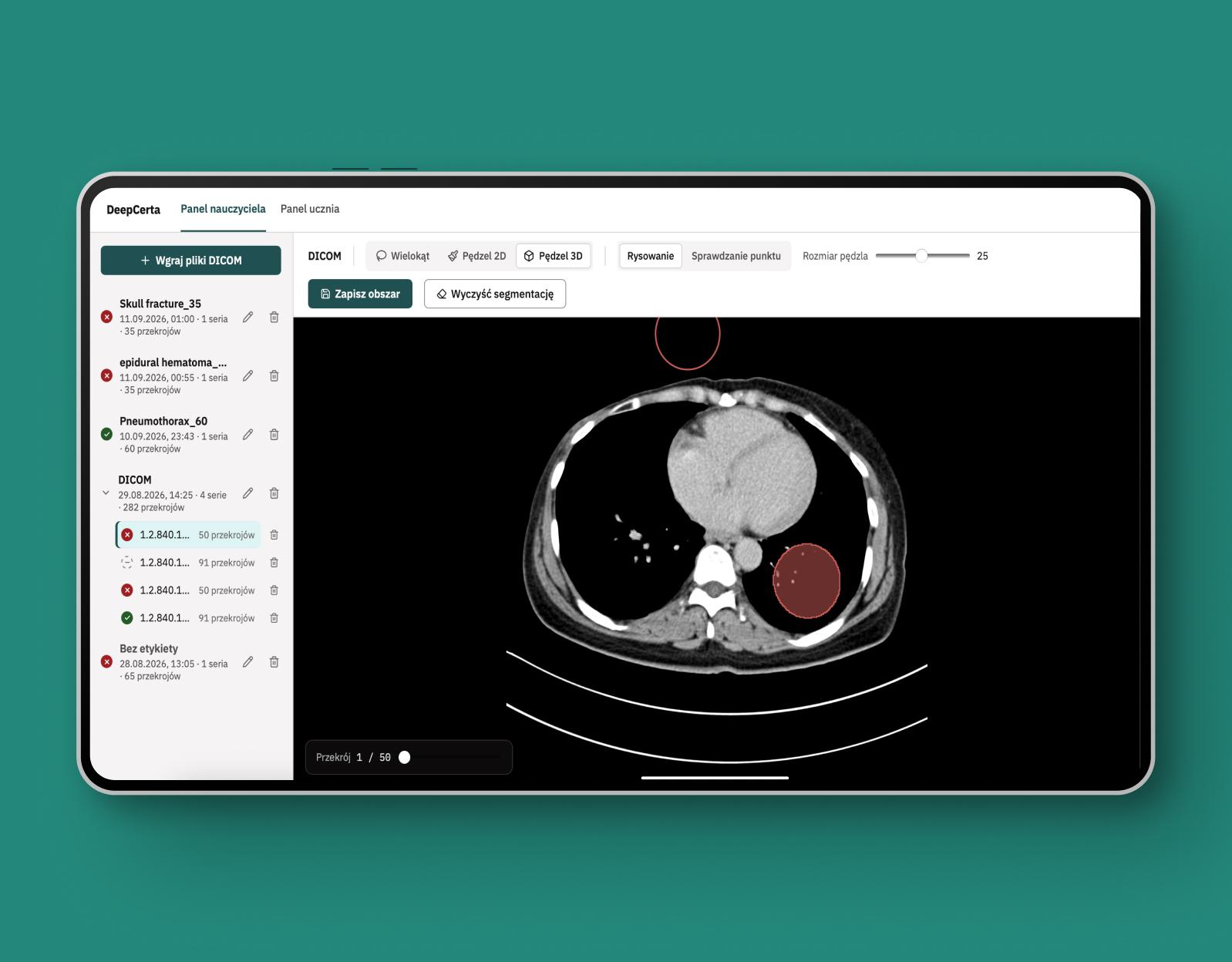
Contours are created directly in the application.
Radiologists have their own tools for marking abnormalities, and contours prepared in those tools could have been imported directly into the DeepCerta application. However, a single question requires an abnormality to be marked on a dozen or more slices, so working across two programs would quickly become cumbersome and time-consuming. The specialist’s time was a significant constraint. That is why examiners can complete the entire process directly in DeepCerta, scrolling through slices and marking abnormalities in the same window.
We store the contours as data describing their shape and position, rather than as separate images. Images take up considerably more storage space, so this approach keeps question files lightweight and allows them to load quickly.
A student’s answer is a single point.
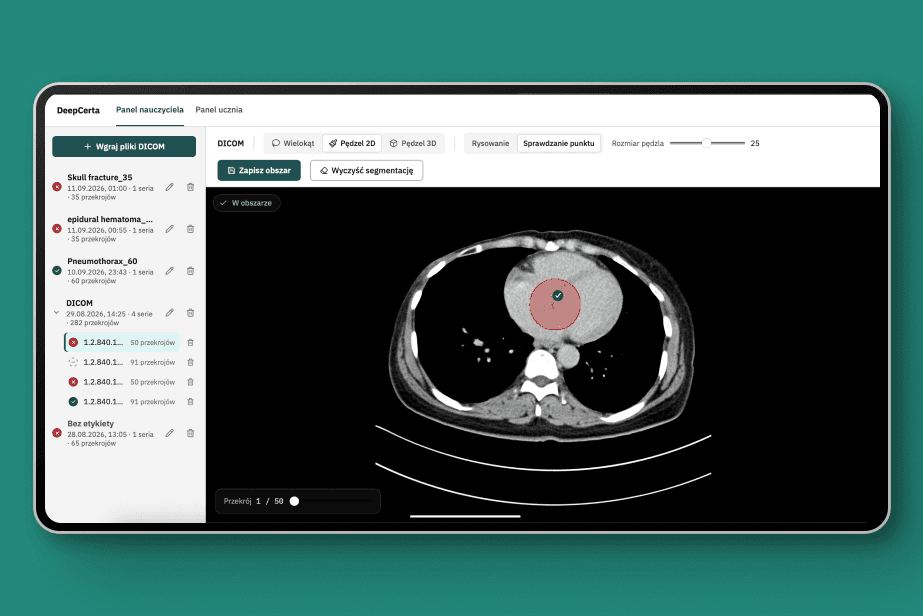
The radiologist marks the area containing an abnormality on a scan, and the student points to where they see it in the image. The platform compares both markings on the same slice and checks whether the student’s selected point falls within the marked area.
As a result, the score does not depend on the interpretation of the person grading the exam. The system has a clearly defined reference prepared by the radiologist and uses it to assess the answer automatically. This grading method tests exactly what the task requires: whether the student can find an abnormality and identify its correct location.
We store medical scans in standard object storage.
Medical scans are large files that hospitals typically store on specialized servers. At the scale of the DeepCerta project, however, there was no need to build that kind of infrastructure. Initially, standard cloud storage was sufficient, allowing scans to be loaded directly into the browser.
This approach allowed us to start with simple infrastructure and expand it as the number of scans grows.
The MVP is ready to be presented to universities to conduct a pilot and see how the tool performs in the hands of the people who will use it every day.
DeepCerta is used exclusively to conduct exams based on previously prepared medical scans. It evaluates students’ selections against contours prepared by the examiner. It is not a diagnostic tool and is not intended for reporting on or interpreting patient scans.
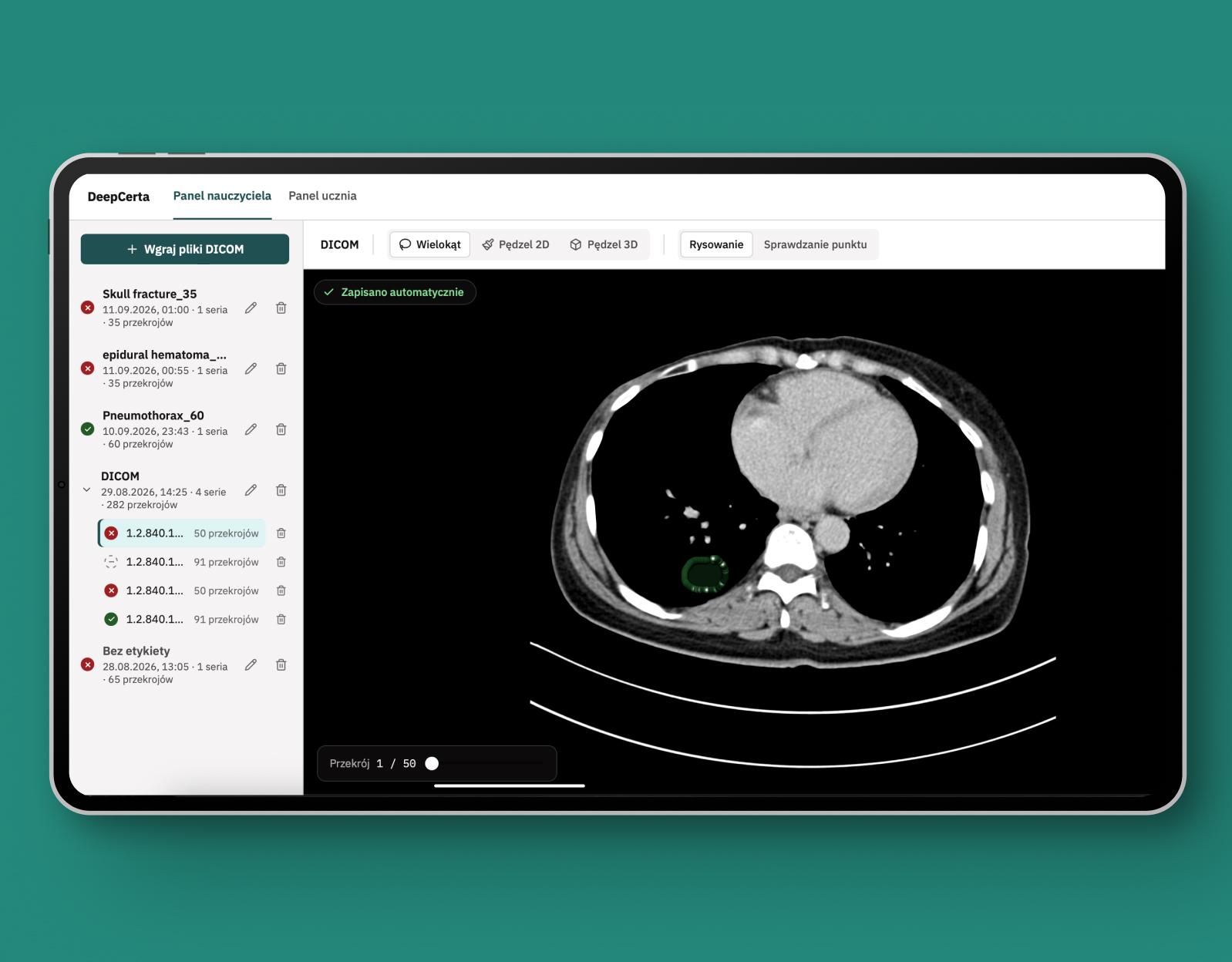

Student Panel
Students navigate through the scan slice by slice and indicate where they see an abnormality. They mark their answer directly on the image.
Teacher Panel
Examiners prepare questions using their own medical scans, marking areas containing abnormalities. They then assemble a complete exam from the prepared questions.
Uploading DICOM Files
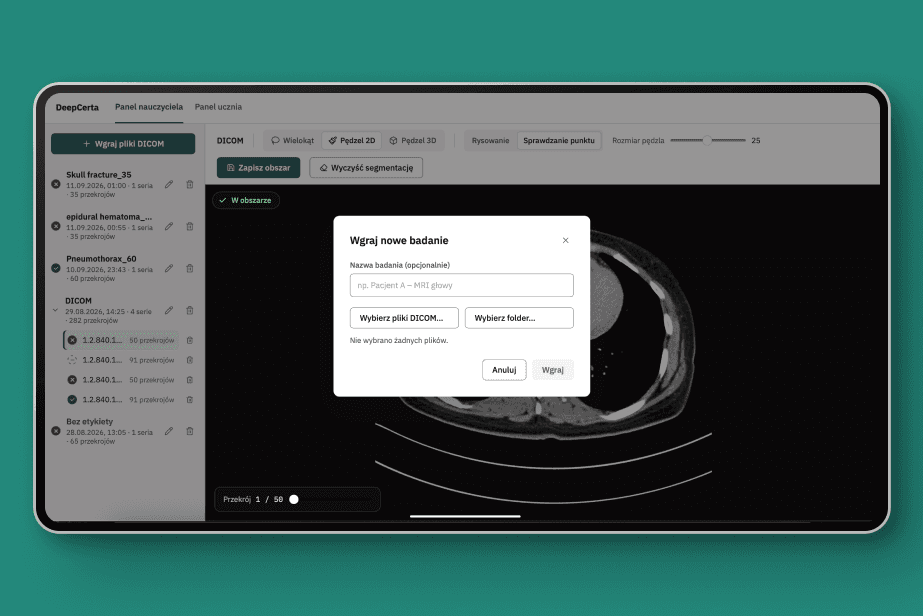
DICOM scans can be uploaded directly to the platform. Once uploaded, the scan opens in the viewer and is ready to be used to prepare a question.
What impressed us most was how quickly and professionally the team turned our idea into a working product.
See how we’ve turned our clients’ ideas into working products in our case studies!
Bilingers App
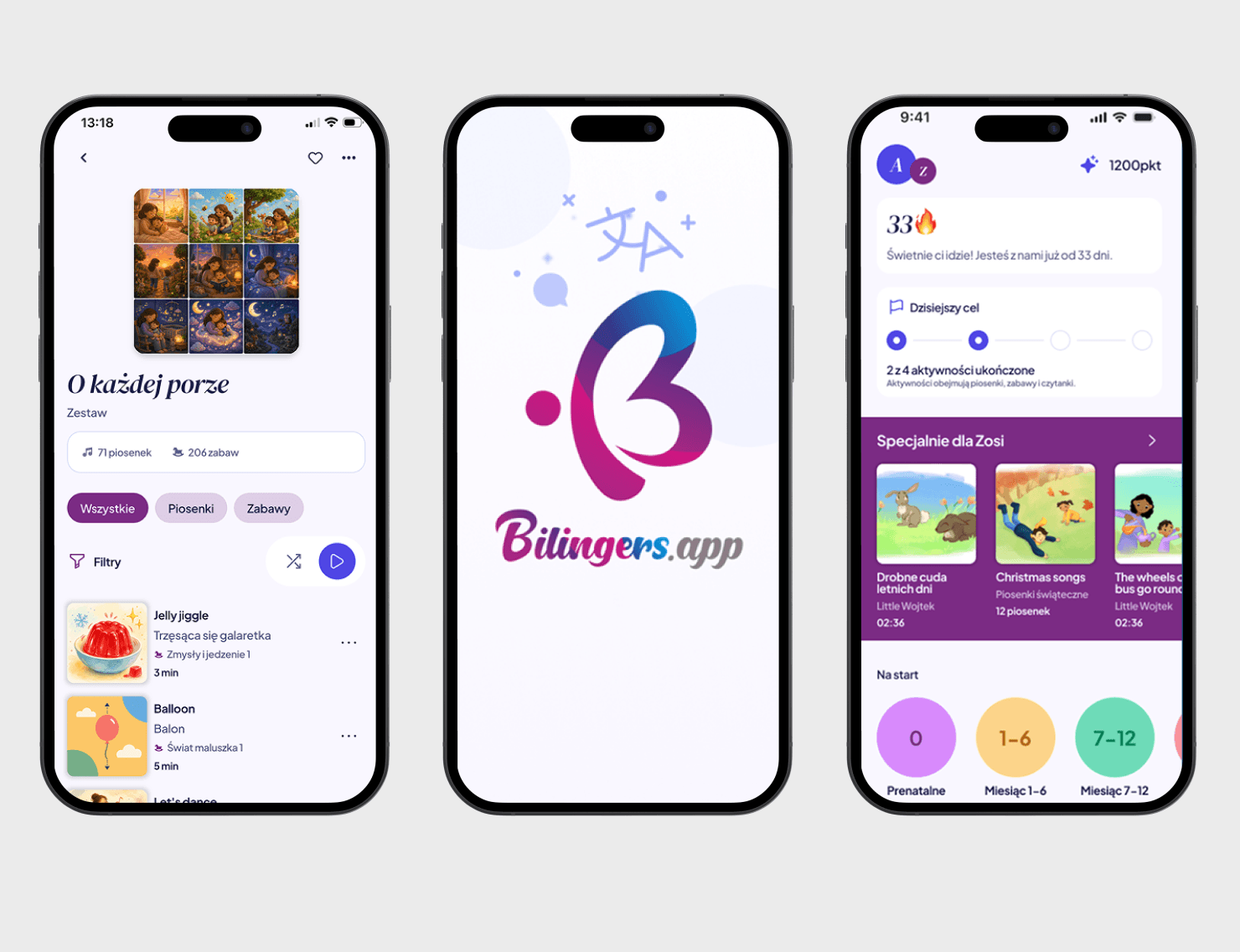
A mobile app supporting children’s bilingual development from the first months of life